


Unicafes Brasil holds National Aquaculture Meeting and strengthens the sector's future in the country.
- Agência Mais Comunica
- Apr 11
- 2 min read
April 11, 2026
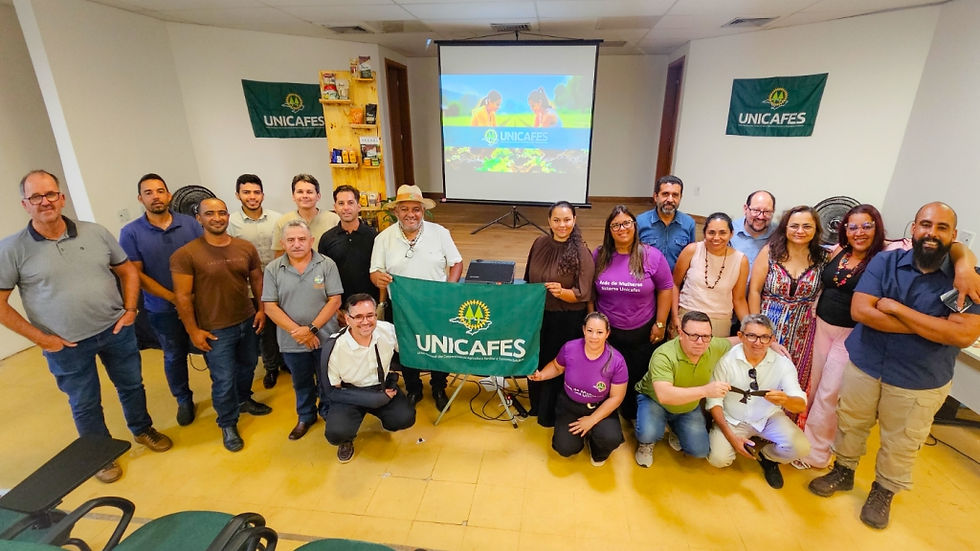
Brasilia (DF) – Unicafes Brasil held the National Aquaculture Meeting on April 8 and 9, 2026, bringing together leaders from family farming cooperatives from various regions of the country, specialists, government institutions, and strategic partners to discuss the present and future of Brazilian aquaculture.
The event, held at CEASA headquarters in Brasília, is part of the actions of the National Aquaculture Program for Family Farming and Solidarity Economy Cooperatives (PNACSOL) and reaffirms Unicafes' commitment to sustainable development, income generation, and the strengthening of solidarity-based cooperativism.
Building pathways for Brazilian aquaculture.
During the two-day program, participants discussed key themes such as production, management, fish certification, access to credit, innovation, and public policies focused on the sector.
The program featured strategic panels that fostered connections between cooperatives and institutions such as the Ministry of Fisheries and Aquaculture (MPA), the Ministry of Agrarian Development (MDA), SEBRAE, and other organizations fundamental to the advancement of the production chain.
The aquaculture program is developed through a partnership with UTFPR - Federal Technological University of Paraná - Dois Vizinhos Campus, which executes a TED - Decentralized Execution Agreement with resources from the Ministry of Fisheries and Aquaculture.
Among the highlights were:
The prospects of PNACSOL and its expansion.
Strengthening institutional partnerships
The debate on fish certification in Brazil
Improving production processes in cooperatives.
Developing proposals for the National Plan for Sustainable Aquaculture Development
Cooperativism and solidarity economy as pillars
The meeting highlighted that strengthening aquaculture necessarily involves collective organization. Family farming cooperatives play a strategic role in productive inclusion, income generation, and the promotion of a fairer and more sustainable development model.
Unicafes Brasil emphasizes that solidarity-based cooperativism and the solidarity economy are fundamental paths to structuring aquaculture production, guaranteeing better marketing conditions, access to public policies, and appreciation for workers in the sector.
Education, inclusion and the future
Another important moment was the launch of the aquaculture course, strengthening technical training and expanding opportunities for family farmers, young people, and women in rural areas.
The event also highlighted the work of Unicafes' secretariats (women, youth, education and finance), demonstrating that the development of aquaculture needs to be inclusive, diverse and integrated.
Positive impact for Brazil
The National Aquaculture Meeting consolidates a significant advance for the sector in the country. By promoting integration between public policies, technical knowledge, and social organization, the initiative contributes directly to:
Increasing sustainable fish production
Job and income generation in rural areas
Strengthening food security
Promoting family farming
Building fairer markets
Commitment to sustainable development
At the end of the meeting, proposals and guidelines for the year 2026 were presented, reinforcing the collective commitment to the growth of Brazilian aquaculture in a sustainable, cooperative and solidarity-based manner.
More than just an event, the meeting represented a milestone in building a productive model that combines economic development, social inclusion, and respect for territories.
Unicafes Brasil continues to strengthen those who produce, organize, and transform Brazil through family farming and the solidarity economy.


Comments